
Description
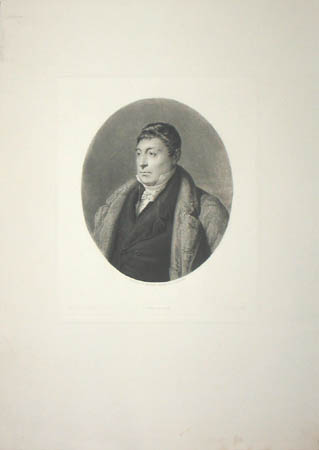
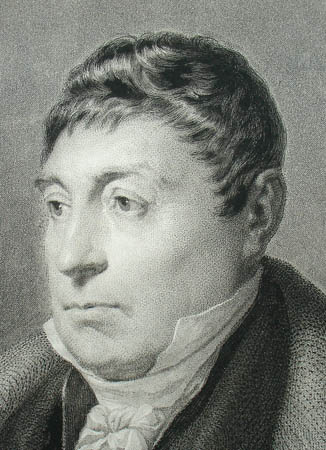
At the beginning of the American Revolution, Lafayette left France and joined George Washington’s army, where he was appointed a major general and fought in Valley Forge and Yorktown. He also negotiated for French aid to the colonists. These achievements won him enduring popularity in America for the rest of his life as a popular symbol of the bond between France and the United States. Returning to France in 1782, Lafayette was an active French political figure and military leader in the ensuing years. He also designed the red, white and blue French flag, which remains in use. Lafayette led the French army in a war with Austria, where he was captured and imprisoned, then liberated by Napoleon. He returned to France in 1799. During the French Restoration, Lafayette was a member of the chamber of deputies. He remained highly regarded and influential in French governmental affairs.
Ary Scheffer was a Dutch-born painter, sculptor and lithographer, who spent most of his career in France and became a French citizen in 1850. He came from a family of artists including his parents and brother Henri. After first being trained by his parents, Scheffer attended the Amsterdam Teeken-Academie and soon afterwards exhibited a painting at the first Exhibition of Living Masters in Amsterdam in 1808. In 1811, Ary and his brother moved to Paris where they became pupils of Pierre Guérin alongside Delacroix and Géricault. He adopted the style of French Romanticism, and by his forties was a successful painter of portraits, history and religious paintings. His works are in the world’s major museums including the Louvre, Hermitage, Metropolitan Museum of Art, and the National Gallery in London.
Edouard Girardet was a Swiss engraver from a family of artists that included his father and two brothers, Karl and Paul. He studied wood engraving from childhood and later on studied painting in Paris at the Ecole des Beaux-Arts, but from 1835 concentrated mainly on engraving. Girardet made his Salon debut in 1839, and continued to exhibit genre paintings, engravings and aquatints there until 1876. In 1844, the Musées Nationaux de Versailles sent Edouard and his brother Karl to Egypt to prepare a commissioned painting of a scene from the Crusades. He also travelled to England and Switzerland, though remained based in France.
Condition: Generally very good with the usual overall light toning, wear, soft creases. Some minor foxing in lower margin, can be matted out.
References:
“Girardet, Edouard (-Henri).” The Grove Dictionary of Art. New York: Macmillan. 2000. Online at Artnet.com. http://www.artnet.com/library/03/0325/T032575.asp (1 June 2010).
“Marquis de Lafayette Collections – Print Collection 2.” Lafayette College. http://ww2.lafayette.edu/~library/special/marquis/MarquisFindAids/printcollection2.htm (1 June 2010).
“Portraits of Lafayette and Washington.” Office of the Clerk of the U.S. House of Representatives.http://clerk.house.gov/art_history/art_artifacts/virtual_tours/house_chamber/portraits.html (1 June 2010). A photo of the original Scheffer painting may be found here.
“Scheffer, Ary.” Dordrechts Museum. 2006. http://cms.dordrecht.nl/dordt?nav=icyibDsHaKpPkCdCeCdDnBIeBfB (1 June 2010).
“Scheffer, Ary.” The Grove Dictionary of Art. New York: Macmillan. 2000. Online at Artnet.com. http://www.artnet.com/library/07/0764/T076454.asp (1 June 2010).