






Description
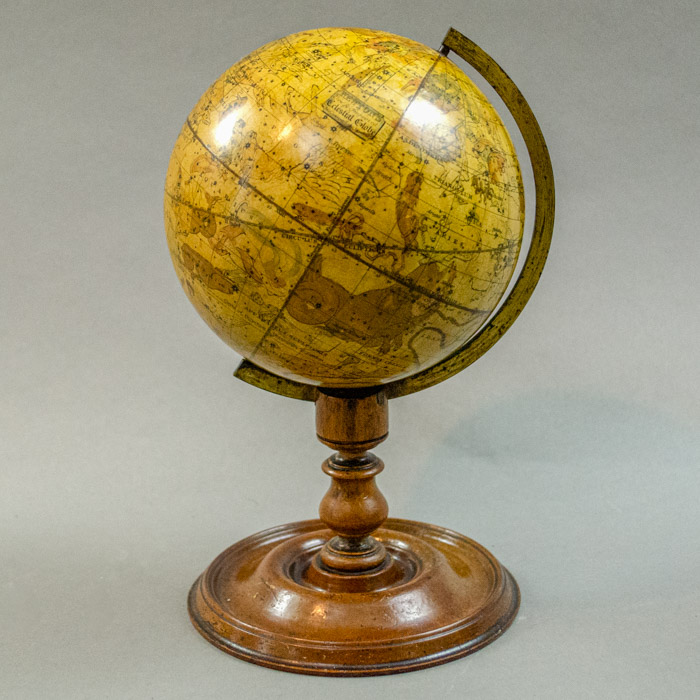
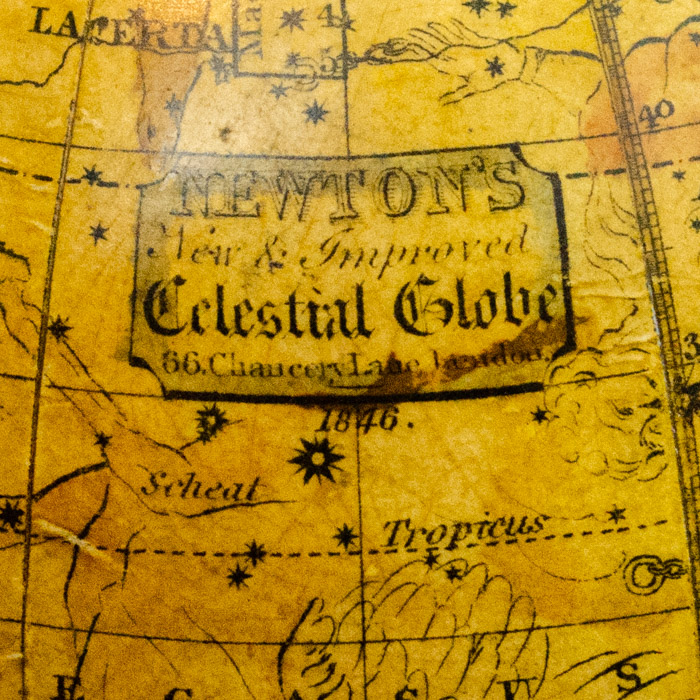
On the celestial globe, the constellations are named and drawn as mythological figures and illustrations of scientific instruments, lightly shaded in tan, pink, brown and green. The stars are represented by different symbols according to five orders of magnitude, corresponding to a key above the cartouche. A number of astronomical coordinates are labeled, including the ecliptic, north and south declinations, the “Circle of Perpetual Apparition at London” at N 38° and the “Circle of Perpetual Occultation” at London at S 38°. Eight of the southern constellations are drawn as well as those of Plancius and Lacaille and some of those of Hevelius.
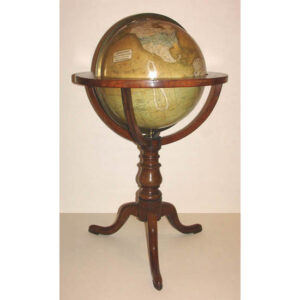
Newton & Son was operated from 1841 to 1883 by descendants of the British globe maker John Newton, who started making globes in the late 18th century. For more information about the Newton family of globe makers, see our Guide to Globe Makers.
Full publication information: 66 Chancery Lane, London.
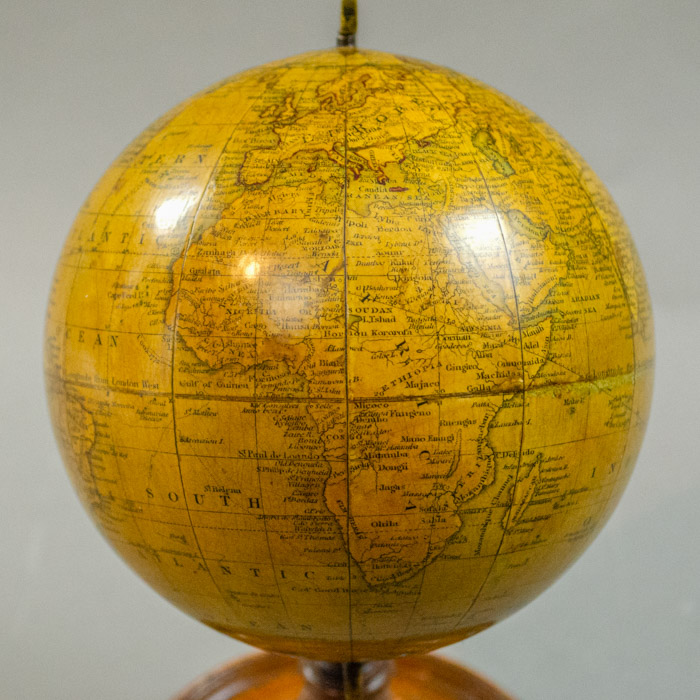
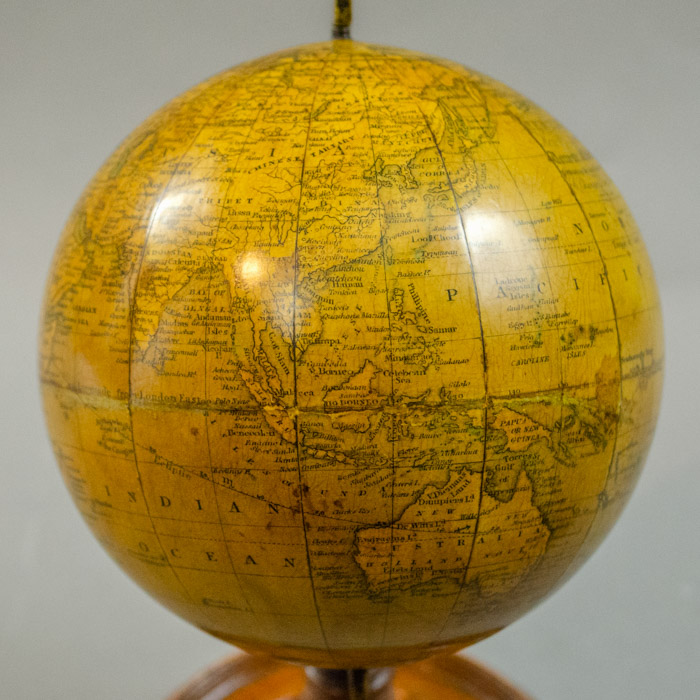
Terrestrial cartouche: NEWTON’s/ New & Improved/ Terrestrial Globe,/ Containing the latest Discoveries./ 66, Chancery Lane, London.
Celestial, rectangular cartouche with rounded inset edges: NEWTON’s/ New & Improved/ Celestial Globe/ 66, Chancery Lane London/ 1846.
Condition: Each generally very good overall, professionally restored, with the usual remaining light overall toning, wear, handling, and touch up to minor scattered small abrasions. Present handsomely with a nice gloassy finish and rich warm tones. Stands very good, richly patinated, with restorations to central baluster standards.
Reference:
Dekker, Elly, et al. Globes at Greenwich: A Catalogue of the Globes and Armillary Spheres in the National Maritime Museum, Greenwich. London: Oxford University Press and the National Maritime Museum, 1999. p. 55.