Additional information
| Century | Late 19th/Early 20th Century |
|---|


$400
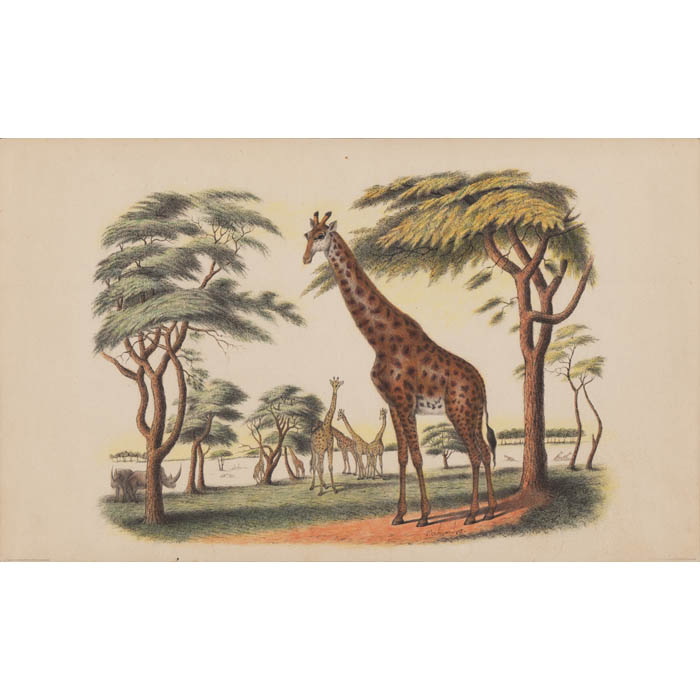
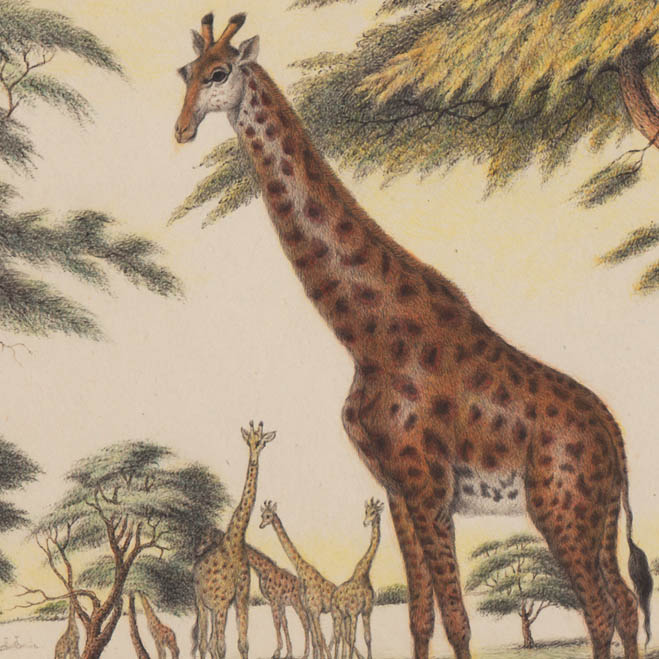
Giraffes
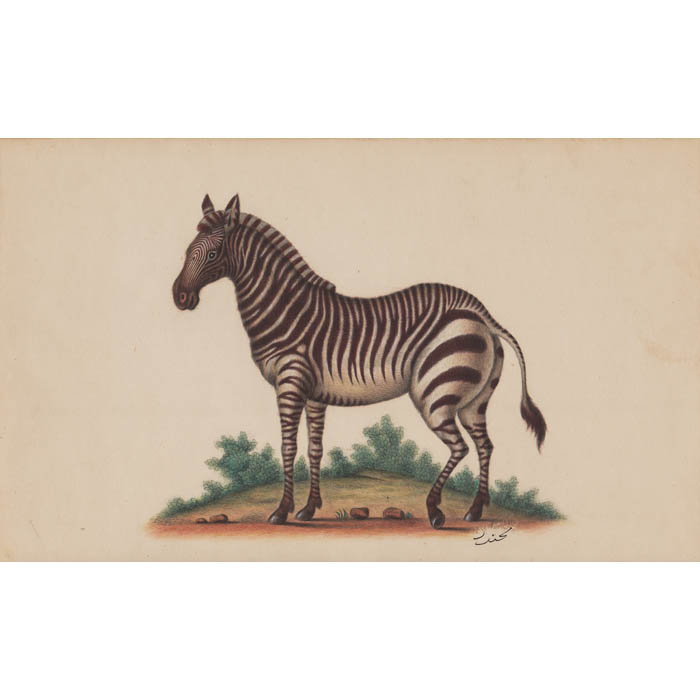
Zebra
Anglo-Indian School: c. 1900
Watercolor on paper
Signed indistinctly
8 x 13.25 inches
Provenance: Christie’s South Kensington, Wildlife Sale
$400 each
Sensitively rendered original natural history studies of African animals in their natural settings: one of a zebra, the other of a herd of giraffes with two rhinoceros visible in the lower left. The realistic portrayals and meticulous detail of the animals (from muscles to individual hairs) demonstrate the artist’s understanding of their anatomy. These works represent the Western style adopted by artists in India, who painted images of animals and flowers for the English market.
The term “Anglo Indian School” refers to works of art (and also decorative arts) of Indian subject matter in the English taste — often with Indian artistic influence — produced in India during the period of the British colonial presence there. This period was roughly from the mid 18th century, when British colonial settlement and rule in India began, to the mid 20th century, when India achieved independence. Anglo Indian art works by indigenous Indian artists were often in bright colors and with a meticulous attention to detail, combining Indian and English artistic styles and sensibilities. They were generally produced in watercolor as souvenirs for Englishmen living or traveling in India, and for export to Great Britain. Natural history works often illustrated native Indian exotic species of flora and fauna. Many were done on paper imported from British manufacturers, such as James Whatman (watermarked “J. WHATMAN,” sometimes with the date of manufacture). The term Anglo Indian Art also has been applied to works by professional and amateur British artists living in India in the colonial period. These include landscapes and scenes from daily life and of native wildlife that appealed to the British public’s fascination with these distant and curious lands of the British Empire. Some of these original watercolors served as source material for prints subsequently produced in Britain, often for travel and natural history color plate books.
Condition: Generally very good with the usual overall light toning and wear. Llama with few short marginal tears, restored.
| Century | Late 19th/Early 20th Century |
|---|